
→ Home / Polycarbonate
A polymer is a complex molecule of many molecular groups linked in a chain by repeating the same type of bond (known as covalent). Polycarbonate, specifically, is derived from carbonic acid and bonded with a chemical group originating from Bisphenol.
It is considered an amorphous substance (lacking a crystalline structure in its solid state) and is thermoplastic, as its mechanical properties vary based on the temperature to which it is exposed (such as thermal expansion). Polycarbonate can adapt to any requirement, especially in the building sector.
Multiwall and solid polycarbonate: the differences
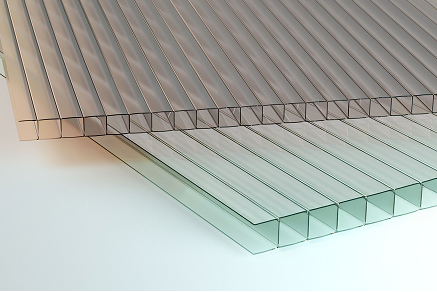
← Alveolare
Compatto →
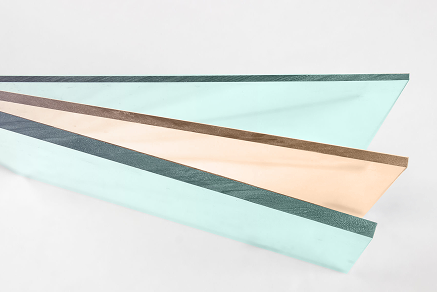
There are two types of polycarbonate: multiwall and solid. The most noticeable difference is their transparency: multiwall polycarbonate has a specific hollow or air-chamber structure, while solid polycarbonate is entirely transparent and more similar to glass.
The compact nature of the latter type gives it a “solid” structure, like a sheet, making it heavier than the multiwall version, which consists of air chambers. Solid polycarbonate is, therefore, more expensive than multiwall, but it also has a more elegant and impactful aesthetic appearance.
Multiwall polycarbonate is more commonly used in industrial settings (continuous curved roofs, continuous or pitched skylights with opening options, vertical glazings, openable northlights and roofing that can be combined with insulated panels). In contrast, solid polycarbonate is primarily used in design and interior architecture (e.g., canopies, internal partition walls, etc.). Nevertheless, nothing prevents multiwall polycarbonate from being used in residential contexts for the construction of small canopies, gazebo covers, terraces, verandas, cantilevered canopies or small coverings for balconies or gardens. The material can be cold-bent to increase rigidity and adapt to any application.
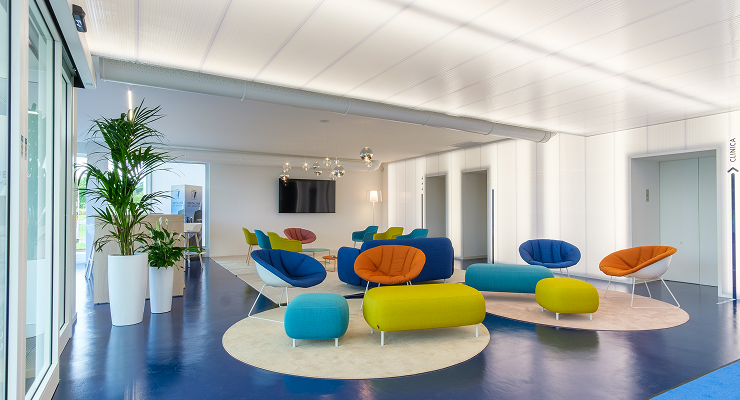
In interior design, polycarbonate allows space division without masonry work and enables the option to color and/or decorate sheets and panels as desired.
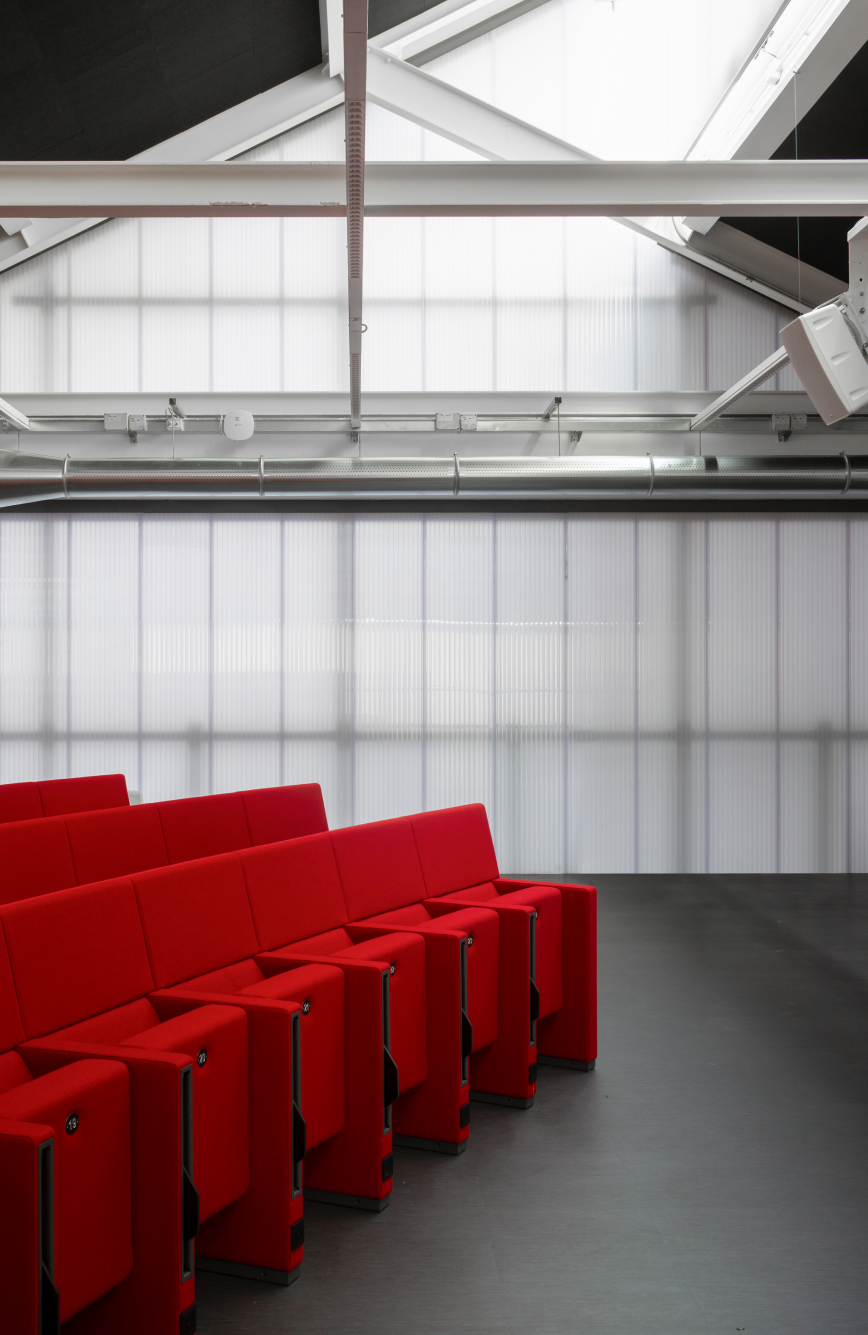
Thanks to the combination of lightness, transparency and superior durability, reinforced polycarbonate is the natural evolution of an already extraordinary material. The increased thickness and optimized structure of the sheets provide exceptional mechanical strength and shape retention, making them ideal for use in environments subject to high stress. Perfect for industrial roofing, vertical glazing and structures exposed to weathering , this material ensures protection, insulation and long-lasting performance.
PolyPiù’s reinforced polycarbonate sheets are available in various configurations and deliver advanced performance without compromising light transmission. Their versatility makes them an outstanding solution for those seeking a safe, high-performance and highly resistant material that meets the most complex architectural and industrial requirements.
Fiberglass (or GRP) is a plastic material composed of glass fibers reinforced with thermosetting resin. Despite its resinous and filamentous appearance, it has a transparency coefficient similar to that of polycarbonate, about 0.86. However, it tends to yellow quickly and is less flexible than polycarbonate – mainly due to the resin it contains.
Like polycarbonate, fiberglass used for roofing is produced in flat, corrugated or ribbed sheets and can be straight or curved, transparent or opaque. This material is available in various widths and lengths and is sold in rolls, ready for installation.
Aesthetically, fiberglass is not particularly elegant, making it a less popular choice among DIY enthusiasts, architects and interior designers.
Glass is undoubtedly one of the best-known materials. Like polycarbonate, plexiglass/PMMA and fiberglass, it allows high light transmission with a transparency coefficient between 0.80 and 0.90. When used for roofing, it usually undergoes a thermal tempering process to increase its safety and impact resistance. This prevents the risk of sharp fragments in case of breakage. Unlike plastic materials, when glass is struck, it shatters into small sharp pieces, forming what is known as a “concentric spiderweb”.
Glass is less resistant than plastic materials: it is more likely to break during installation. It withstands only 10 Joules of impact and has a mechanical resistance of about 170 N/mm² (values for 4 mm thickness). Due to its inherent weight, it requires substantial anchoring when used in suspended structures such as canopies.
Among the available materials, glass is currently not recommended for the construction of canopies or self-supporting structures.
Plexiglass (or PMMA/Polymethylmethacrylate) is more transparent than glass, polycarbonate and fiberglass, with a 0.93 transparency coefficient. It resists impact up to 12 Joules (for 4 mm thickness), as well as weather conditions, humidity and chemicals, making it widely used in interior furnishing. It is a flexible material that can be thermoformed but does not have the same degree of impact resistance and elasticity as polycarbonate. Available in various colors and thicknesses (from 1 to 30 mm), it does have some drawbacks when used outdoors: over time and with sun exposure, it tends to yellow if not treated with UV additives, to harden and to crack. It is also prone to scratching and requires moderate cleaning.
Nonetheless, it is used for various applications with no particular technical requirements, such as outdoor covers, displays and showcases.
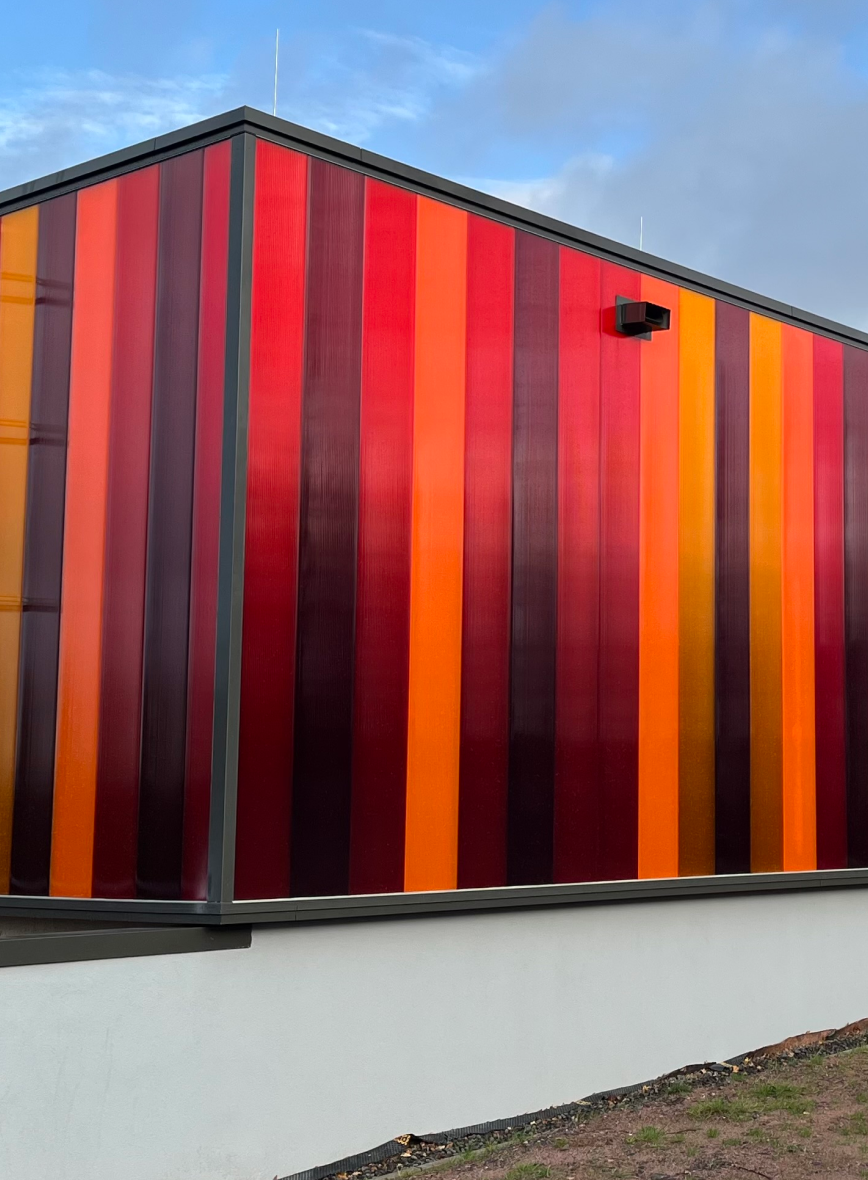
PolyPiù’s advanced Research & Development lab allows the application of special treatments to both multiwall and solid polycarbonate to enhance resistance, aesthetics and functionality. Our technologies improve the already excellent durability of the material by protecting it from abrasion, UV rays and chemicals while enhancing its energy efficiency. Each innovation is designed to ensure superior quality products that meet the demands of construction, design and industrial sectors.
Various treatments are available: UV protection extends the material’s lifespan by preventing yellowing and degradation due to sun exposure, while bicolor options allow for customized aesthetics and visual comfort. The IR (Infrared) treatment reduces heat transmission into buildings, improving indoor comfort and optimizing energy consumption. The matte anti-glare finish diffuses light evenly, reducing reflections and ensuring more comfortable lighting.
Beyond technical performance, PolyPiù polycarbonate is available in a wide range of colors, from clear to black, including vibrant and trendy shades. This variety allows designers to find the perfect aesthetic solution for any application, ensuring ideal integration with the surrounding environment. Thanks to a flexible production process and advanced technologies, PolyPiù also develops custom colors tailored to large-scale projects and special applications. Collaboration with architects and designers turns every vision into reality, offering unique and distinctive solutions that merge functionality and style.
Sustainability and recyclability of polycarbonate: our commitment
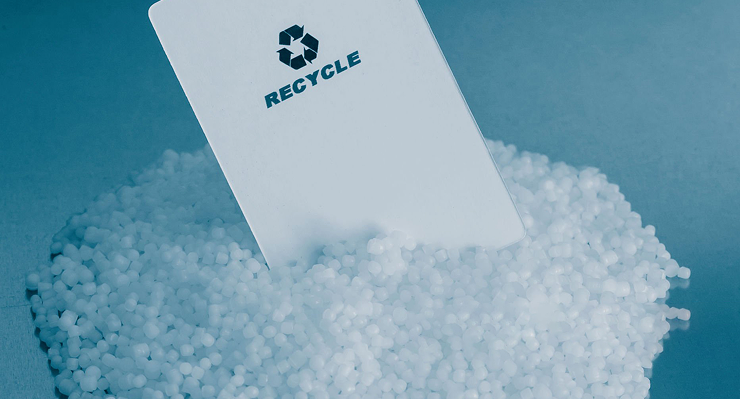
For PolyPiù, sustainability is a responsibility. With the launch of the PolyPiù Green range, the company has chosen to integrate circular economy principles into its production process, transforming processing scraps into new high-quality polycarbonate sheets. Through an advanced grinding and re-granulation process, sheets and panels are reused to create 100% recycled modular ceiling systems for industrial use and continuous roofing that contains 30% recycled material – reducing environmental impact without affecting performance.
PolyPiù’s sustainable approach goes beyond production by promoting local networks for resource recovery and reuse. Every product is designed with careful attention to its entire life cycle to reduce waste and optimize raw material usage. Eco-conscious innovation results in more responsible materials that combine durability, efficiency and respect for the environment – proving to be concrete solutions for more sustainable construction.
Iscriviti gratuitamente alla fiera!
