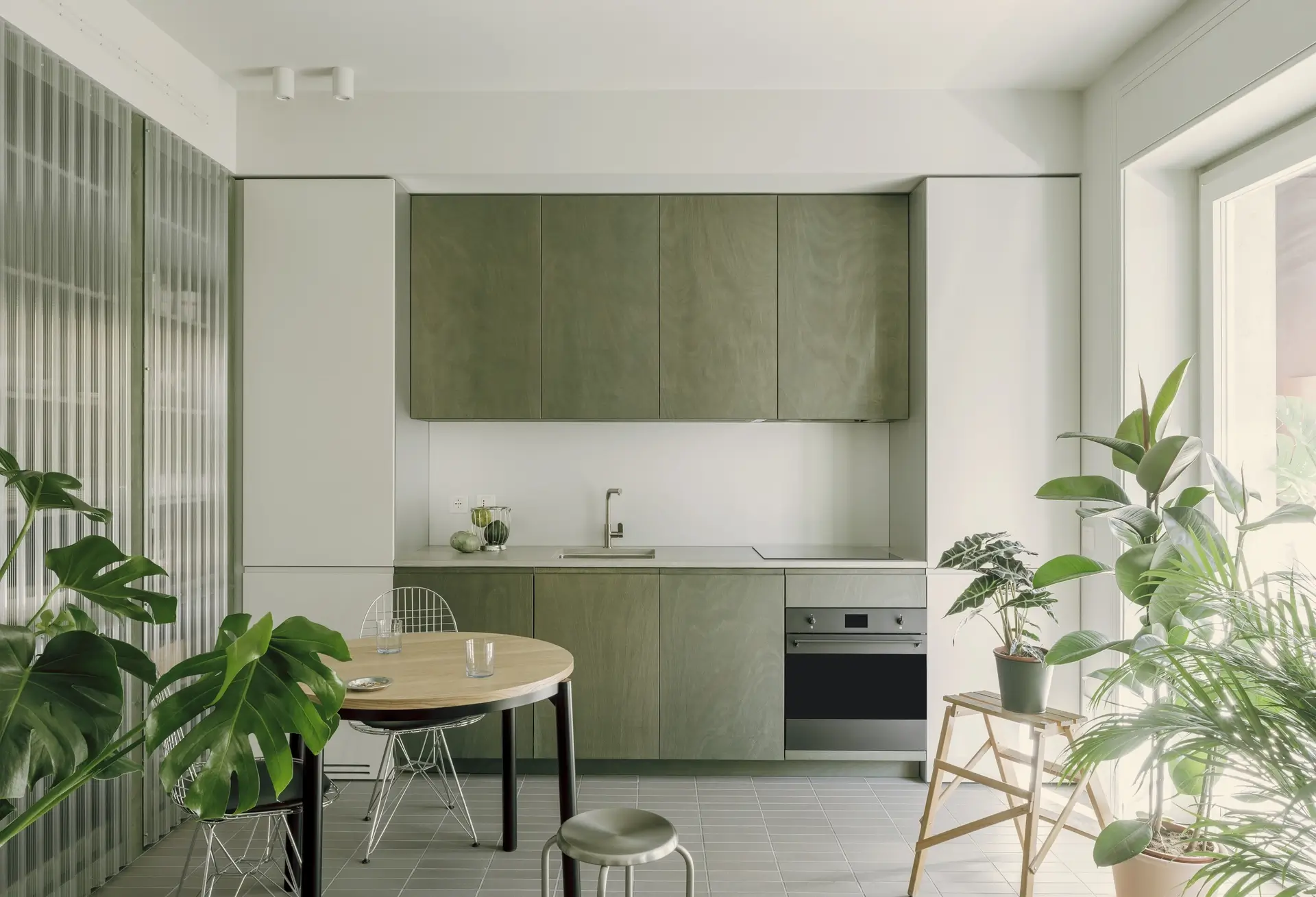
The project involves the conversion of an apartment in a 1960s building in the Maggiolina district of Milan. Specifically, the project stems from the division of the original home of the client’s parents – a gardener – to create a particularly narrow two-room apartment with a long linear balcony, an element that becomes the starting point for the entire concept.
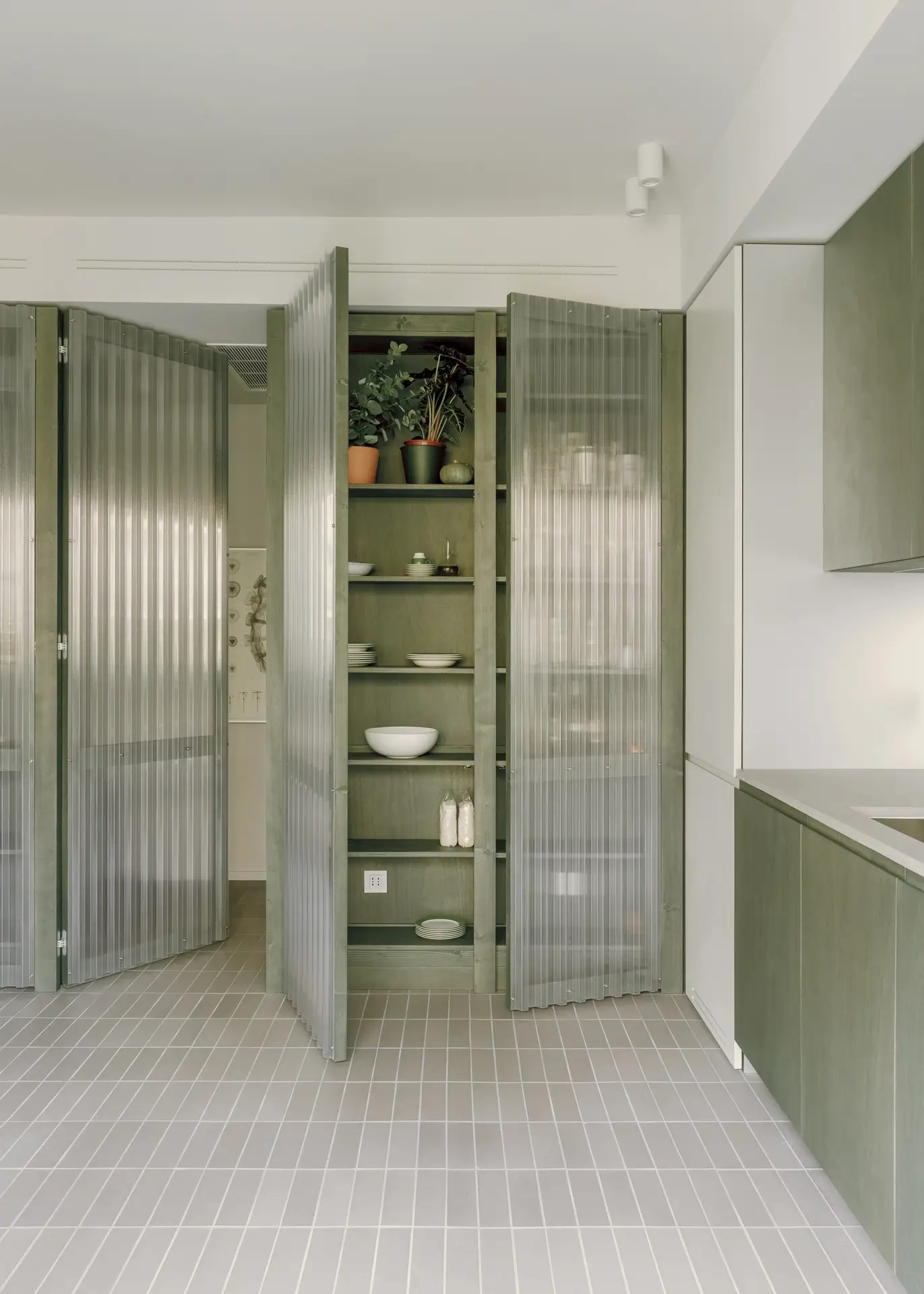
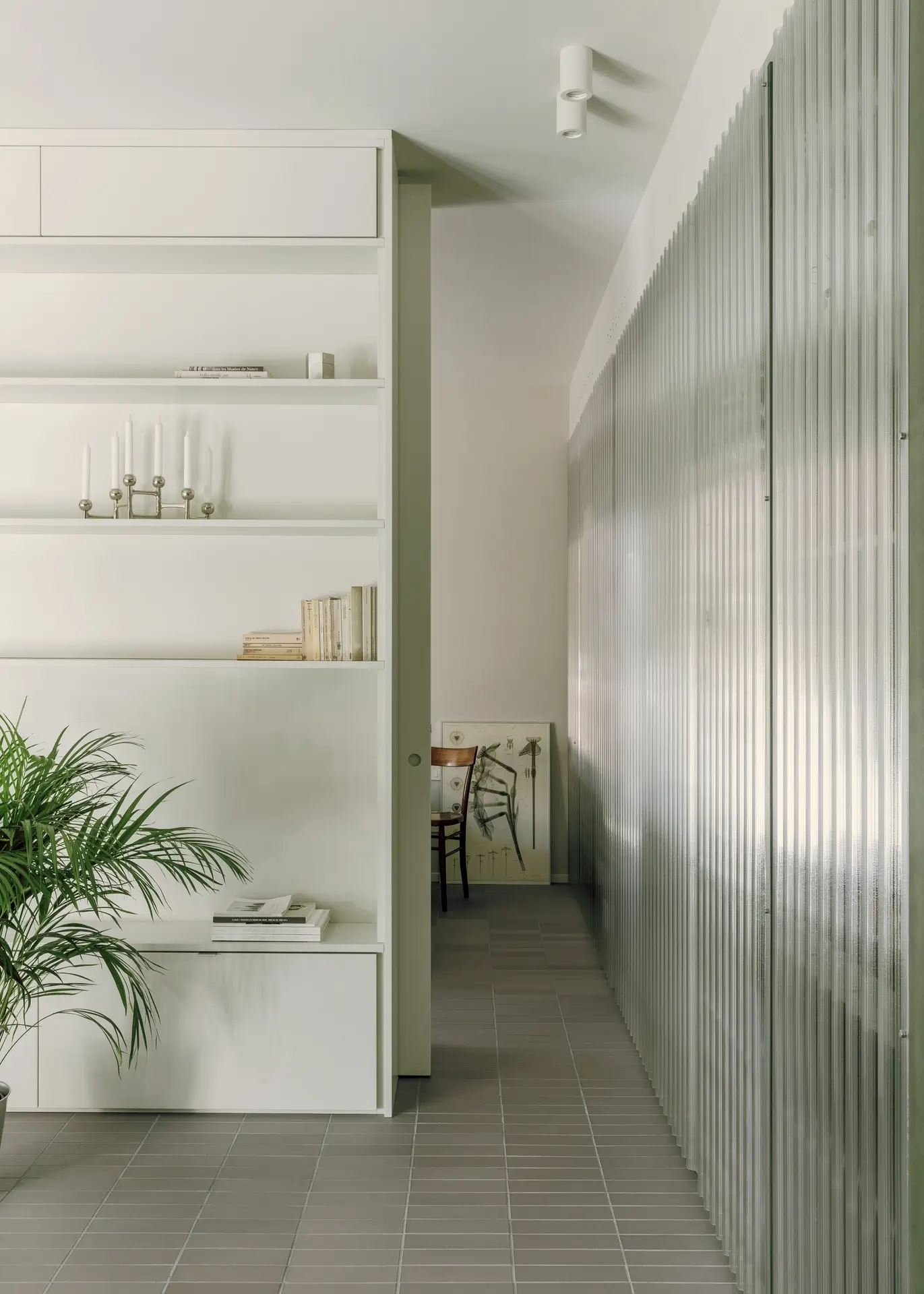
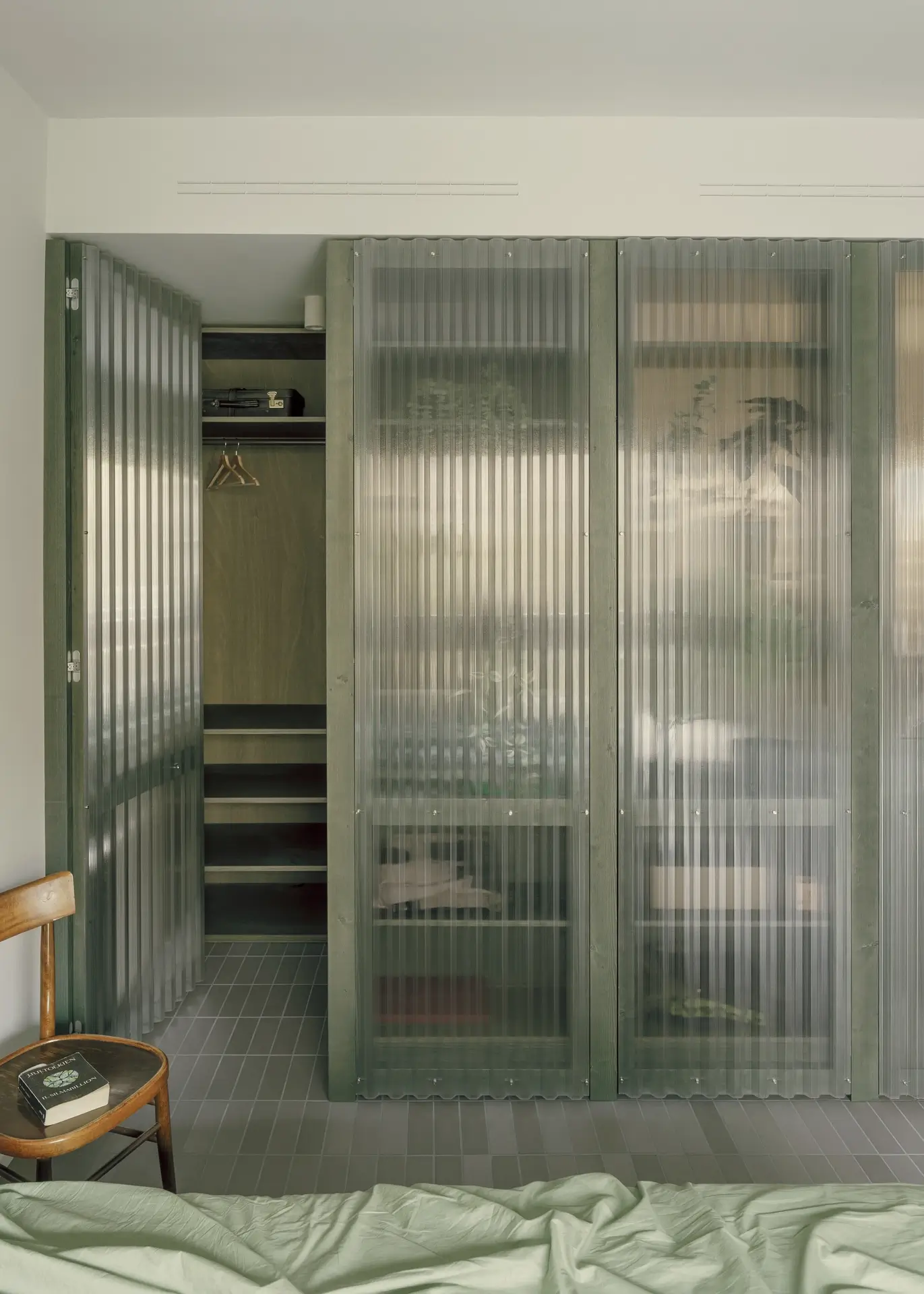
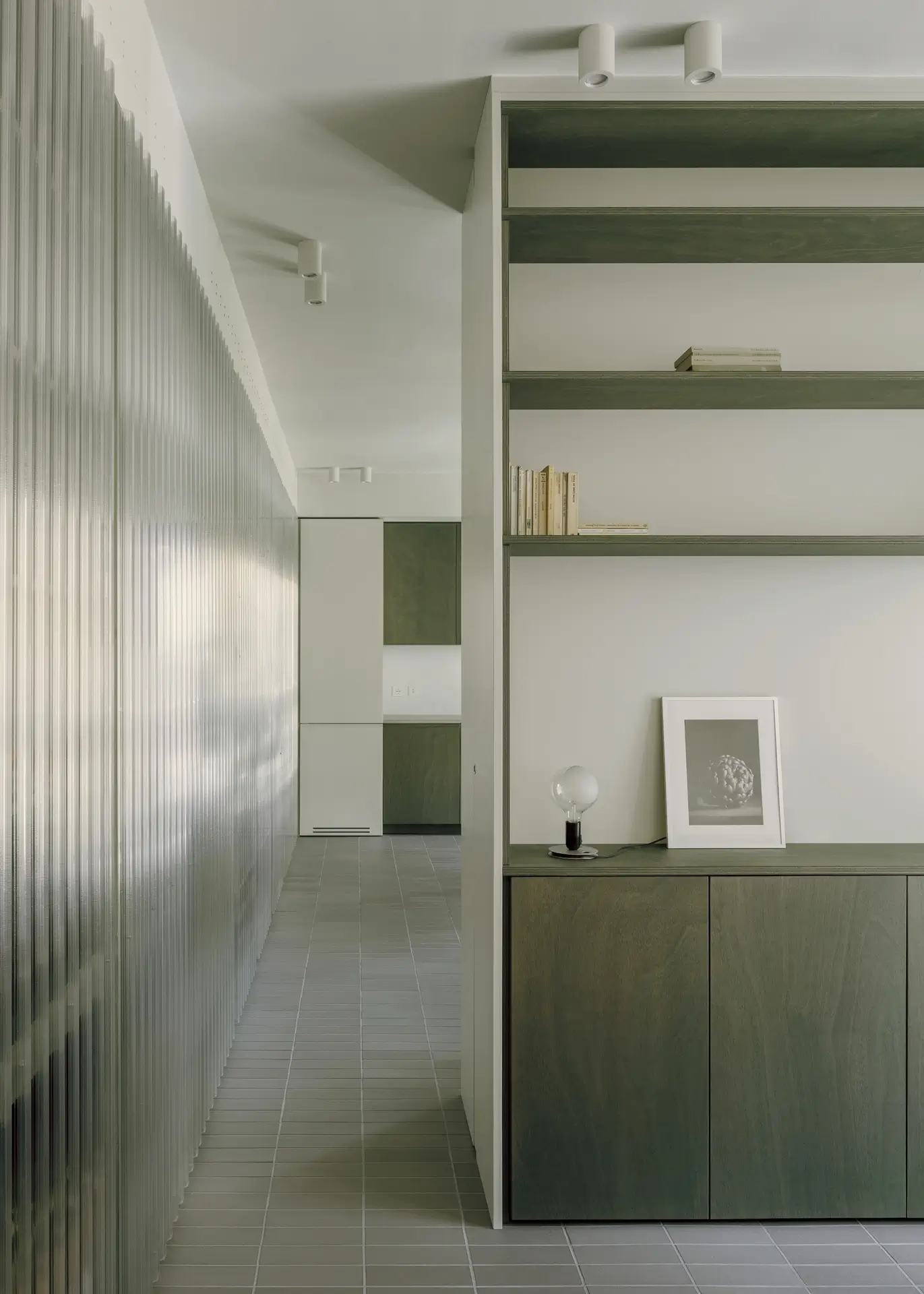
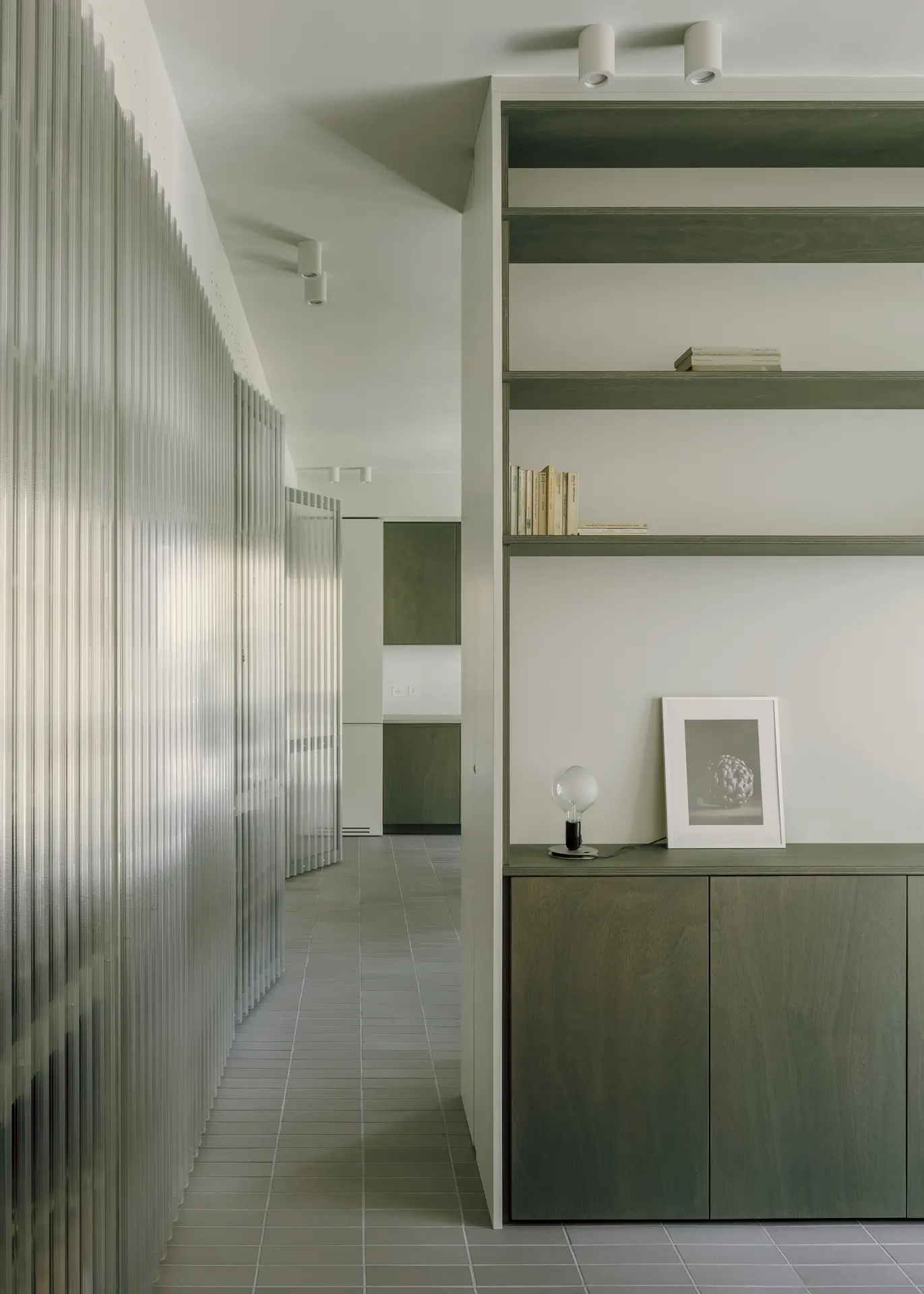
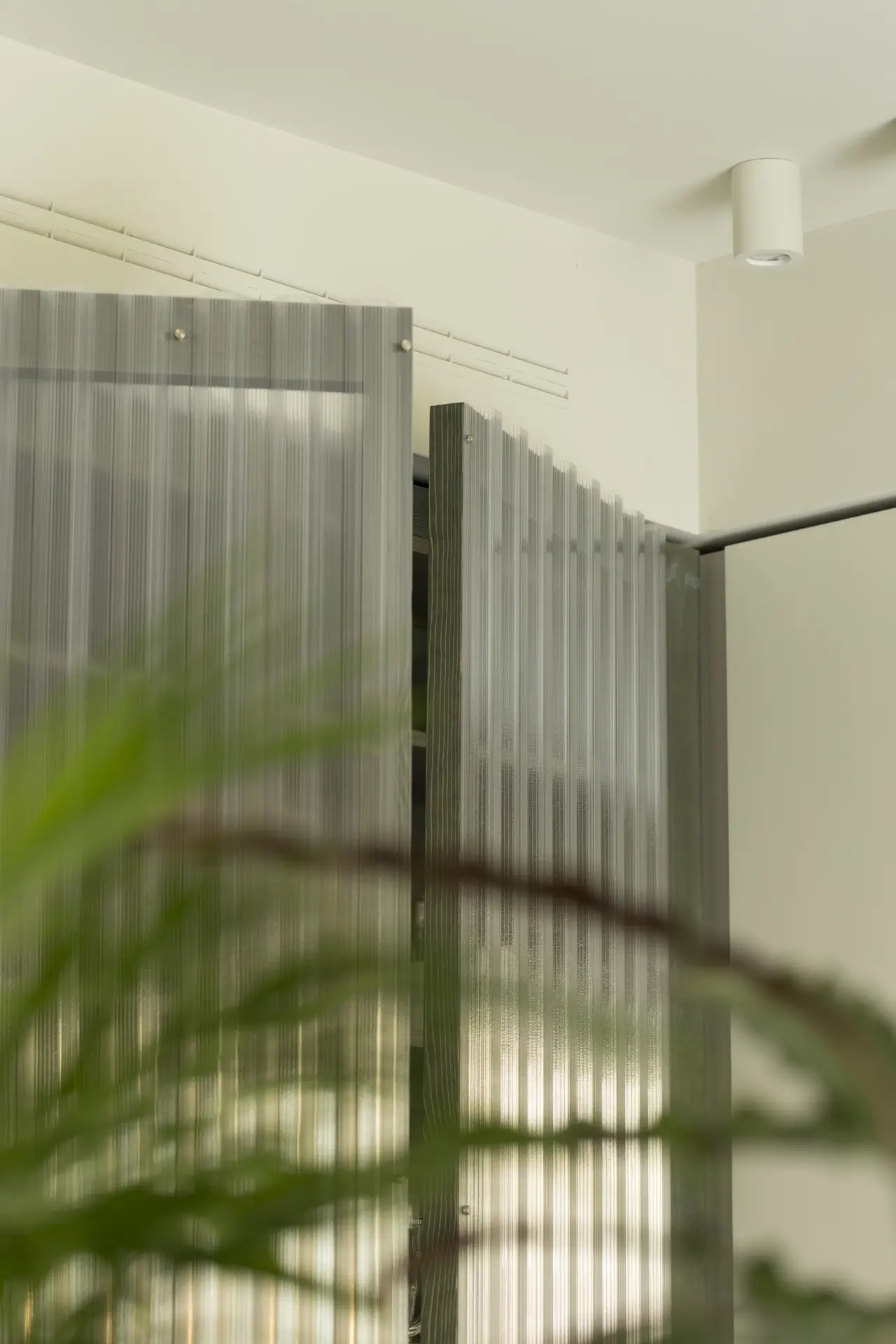
The design idea developed by Solum Studio consists of replicating the balcony inside the flat by inserting a “living wall” conceived as a greenhouse. This 40 cm thick backbone organises the space by separating the service areas from the living area and bedroom, which are left free and permeable. At the same time, the system allows natural light to enter the service areas, ensuring privacy and spatial continuity.
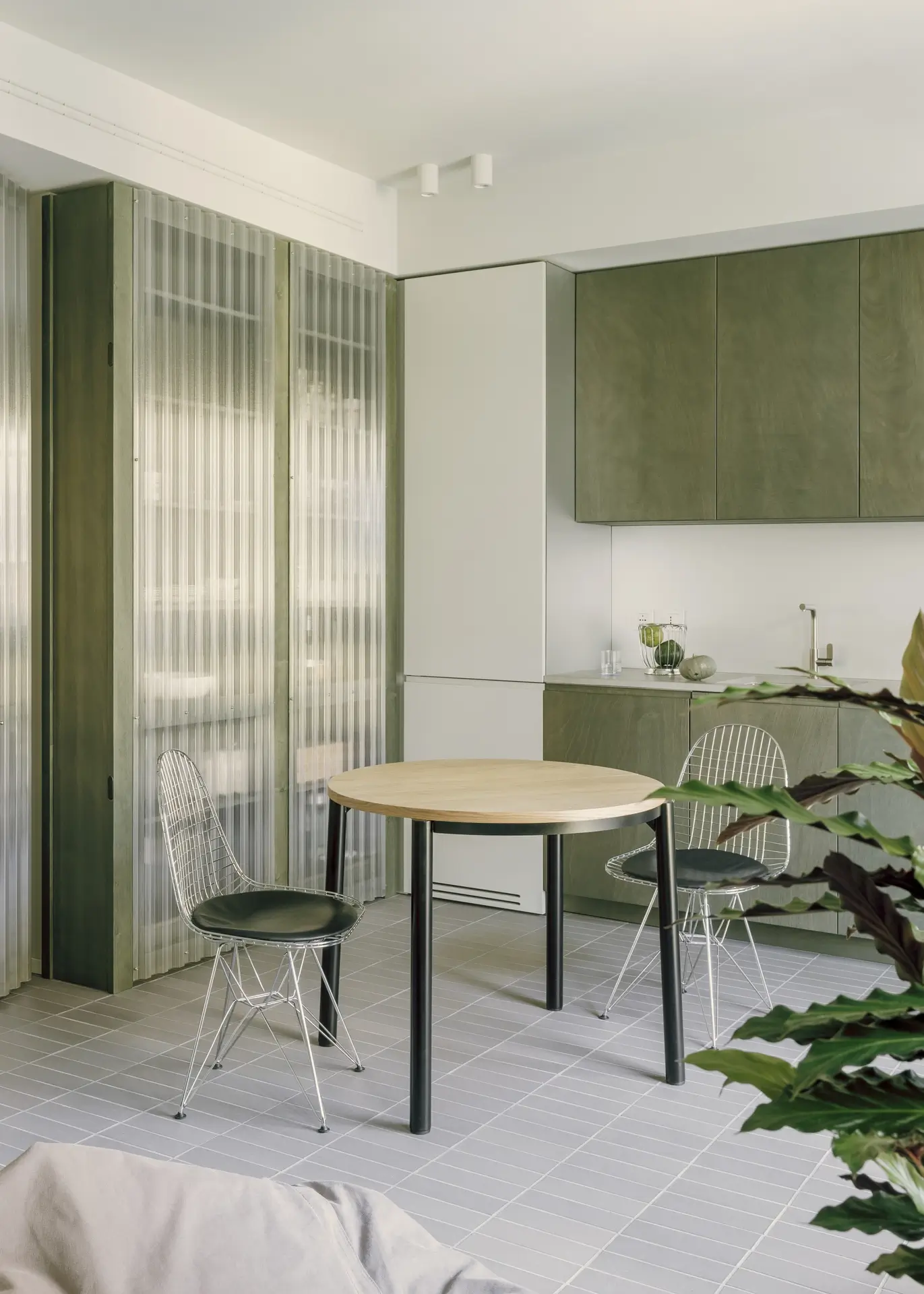
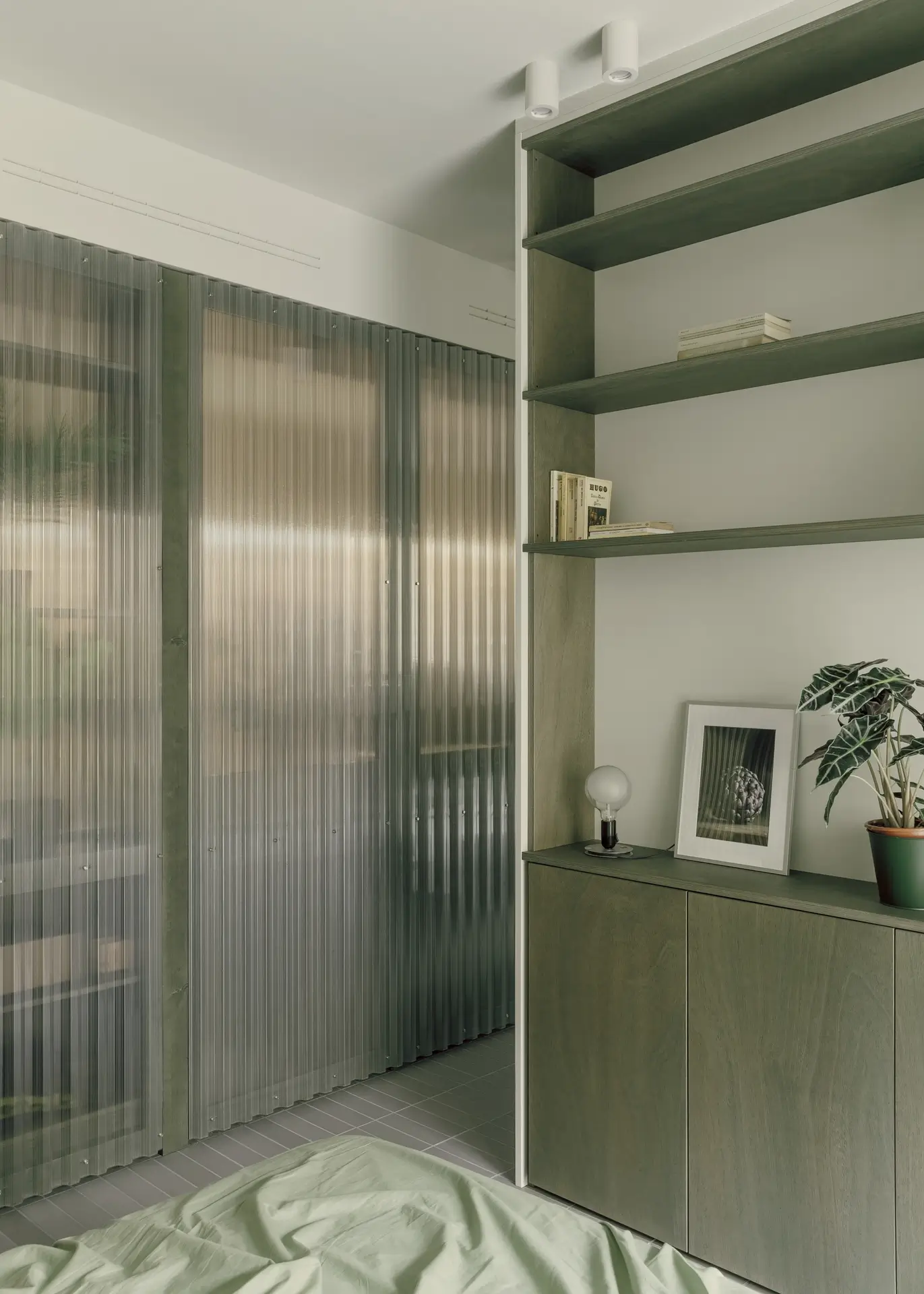
From the early stages of the design, PolyPiù polycarbonate emerged as the material most consistent with the idea of a domestic greenhouse. The corrugated panels cover the modular structure in green-painted wood and become doors connecting to the entrance and walk-in wardrobe, creating a play of reflections and transparencies that energises the space. The reference to the language of greenhouses is evident but reinterpreted in an urban and contemporary key: the material filters the light, creates visual depth and helps to define an organic and luminous atmosphere.
In the bathroom, polycarbonate interacts with ribbed glass, maintaining material consistency while introducing an effective tactile and visual variation. The entire flat reflects the desire for practical and concrete management of spaces in which greenery plays a leading role: klinker tiles, typical of the post-war Milanese tradition, cover all the floors, evoking a winter garden; the painted plywood, the concrete kitchen top and the polycarbonate panels complete the scene with an essential and functional language.
In this project, polycarbonate is a true architectural device: a lightweight structure, light filter and partition at the same time, it helps to translate the client’s identity into a coherent solution that is both technical and evocative.
Photo Credit: ©Nicolò Panzeri